
Breech Baby
A question I’m contacted a lot about is whether reflexology will turn a breech baby.
What is a Breech Baby?
A breech presentation is when the baby presents with its head at the top of the uterus instead of head down. Breech presentation is very common in early pregnancy and by 36-37 weeks of pregnancy, most babies will turn into the head first position. Towards the end of pregnancy, only 3-4% of babies are in the breech position. Delivering a breech baby makes labour more difficult and so it is usual for a c-section to be offered if the baby doesn’t turn although some women may still choose to opt for a planned vaginal delivery.
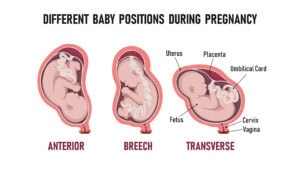
Different baby positions during pregnancy
Will Reflexology Turn a Breech Baby?
Reflexology will not turn a breech baby and there is no evidence or proof to suggest that it can. There will always be examples of babies that turned after a reflexology treatment, and I have indeed seen this with clients but perhaps the baby was going to turn anyway.
Reflexology is complementary therapy working on the feet and can be helpful in reducing stress levels and helping muscles and ligaments to relax. If the pelvic girdle and surrounding muscles are relaxed, the thinking is it may make it easier for the baby to turn if the baby wants to - relaxed muscles may allow more space than tight stressed muscles though again, I must stress that there is no clinical evidence to suggest this is the case.
If you're thinking of having a reflexology session for relaxation and your baby is breech it is always helpful to make sure you tell your reflexologist at the time of booking your appointment so that they can discuss this with you ahead of your appointment.
Why are Some Babies in the Breech Position?
There can be different reasons as to why babies are in the breech position: for example, it is more likely that a baby is breech if it is a first pregnancy; if there are twins or multiple pregnancies; you may have been told you have low lying placenta or placenta previa; the shape of the uterus or the amount of amniotic fluid can affect whether the baby is head down; the cord may be short or wrapped around the baby’s neck; or the baby may just have got comfortable in that position. I’m highlighting the different reasons because causes and situations vary, and you may be offered different options to somebody else whose baby is breech.
What if my Baby Doesn’t Turn?
Your midwife or medical team will discuss options with you if your baby is still breech at 36 -37 weeks. Some women may be offered an ECV (External Cephalic Version) where an attempt is made in hospital by an obstetrician to manually turn the baby. A muscle relaxant is given prior to the ECV and this procedure is usually offered at 36 or 37 weeks, although the exact timing will differ across health trusts. Some babies do not and should not turn for reasons such as cords in the wrong place. An ultra sound scan will also be performed beforehand to check that it would be safe for the baby to turn. ECV isn’t suitable for everyone and might not appropriate for you if you have had a previous c-section in the last 2 -3 years or if a c-section is being recommended for other reasons. Around 50% of breech babies turn with ECV.
Moxa
Prior to an ECV being offered, some midwives may suggest trying moxibustion or moxa sticks. Moxa is a traditional chinese herb. The moxa sticks are heated and then moved in small circles to the outer tip of the little toe close to the acupuncture point, bladder 67. Published evidence suggests that moxibustion is effective in reducing the need for ECV – but like ECV, moxa isn’t suitable for everyone and so it is important to speak to your midwife or obstetrician if you are thinking of trying it. Also, if you’re not eligible for ECV then you shouldn’t have moxa. Additionally, you shouldn’t use moxa if you have high blood pressure, a previous c-section scar, excessive or inadequate amniotic fluid, low lying or placenta previa or a transverse position baby. Always check with your midwife first and if you do decide to use it, always go to an experienced acupuncturist who is trained in using it so they too can assess if it is safe for you to have it. Chelsea & Westminster Hospital in Kensington, London has a clinic where it offers moxa as an option for some women to try and turn a breech baby.
Your midwife or medical team may also suggest exercises such as moving onto all fours to help create a hammock effect in the uterus allowing more space for the baby to turn but there is no scientific evidence to suggest this will help. Again, it’s important to speak to your midwife or medical team about what is right for you and your individual situation.
Sources and Acknowledgements
The National Childbirth Trust. www.nct.org.uk
Royal College of Obstetricians and Gynaecologists. www.rcog.org.uk
Sarah Wickham, Author Midwife, Researcher. www.sarawickham.com
Clinical Reflexology in Pregnancy and Childbirth by Denise Tiran
Reflexions – The Magazine for the Association of Reflexologists
Disclaimer: All content within this article is provided for general information only, and should not be treated as a substitute for the medical advice of your own midwife, doctor or any other health care professional. Nightingale Reflexology is not responsible or liable for any diagnosis made by a user based on the content of this site. Nightingale Reflexology is not liable for the contents of any external internet sites listed, nor does it endorse any commercial product or service mentioned or advised on any of the sites. Always consult your own midwife or medical team if you are in any way concerned about your or your baby's health.